That’s right: check out the Injera, Somalian-style paired with a Dal (with lauki and green mango), a Chicken Curry, and a Brussels Sprouts and Fenugreek subzi. Mmmmm mmmm mmm!

Creating, collecting, and sharing thoughts and ideas. And learning along the way.
That’s right: check out the Injera, Somalian-style paired with a Dal (with lauki and green mango), a Chicken Curry, and a Brussels Sprouts and Fenugreek subzi. Mmmmm mmmm mmm!
Well, if you know I love dals, you know me well. And if you know me that well, then you most likely also know that I love to improvise with dals. Yesterday, I made a Methi Dal, which is no ordinary dal because it has methi (fenugreek) in it. Methi is an interesting green leafy vegetable that demands that you treat it just right or else it will go bitter on you. So, you must use it in the right amounts and with other foods that will complement its flavor.
So, I made a Methi Dal which is fit for a prince, nay, a king! Because not only does it have the key ingredient, methi, it has a number of other delectable veggies: half a green mango, diced red tomatoes, one large red onion, and a cup of baby carrots. A little turmeric, and a few green chillies, and you’re ready to pressure-cook the lot. The lentil of choice, by the way, is the ubiquitous yellow Toor dal. After pressure-cooking, you use a hand-blender to puree this goodness. Add a dash of lemon juice and salt to taste, and it is good as is, but no, I have to make it impossibly good, of course.
And the way I do that, is by giving it one phenomenal tadka: a tempered seasoning in desi ghee with hing (asefotida), mustard, cumin, garlic, dry red chillies, and kari patta (fresh curry leaves). When the aromas have reached their height, toss it into the dal, bring to a rolling boil for a couple of minutes, then turn off the fire, cover lid and let it rest for another couple of minutes before you serve it with hot white basmati and rotis. Keep the desi ghee bottle at hand, because you must put in a small dollop into the steaming hot rice and dal.
I had two kinds of papads on the side– which were both phenomenal. But the Methi Dal stole the show!
The pictures in this album were taken at the various stages of cooking the dal. I hope that it will tell a picture story that is even better than following a written recipe. The unanimous reaction at my dinner table was: Yeh Hui Na Baat!


It is my goal to document here as much of the ordinary as I do the extraordinary. And in line with this, I have, on and off, talked about the simplest of home-cooked meals and especially certain foods that hit the comfort spot right on and right away. This post is a tribute to that very same sentiment. Quite recently, having returned from a week-long vacation to exotic locales wherein I sampled everything from haute cuisine to street-food, at the end of the week, when I got home, what is it that I made to satisfy my longing for a “simple” meal? Mango Dal, White Rice, and a Red-Hot Chicken Curry. Yes, that’s a combo that hits the spot for me! See for yourself:

And what might that be, you ask? Well, allow me to inform. It consists of the following:


First published on Monday, November 24, 2008, here’s another one for the files…
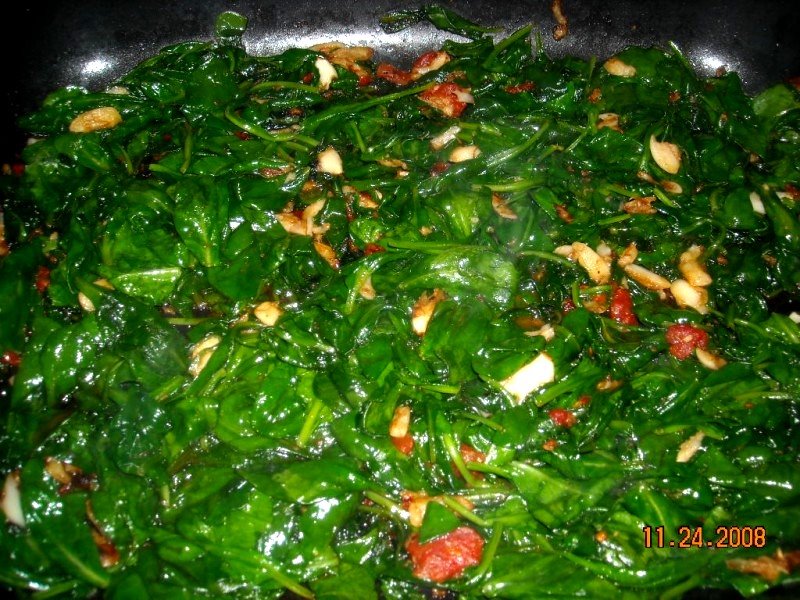

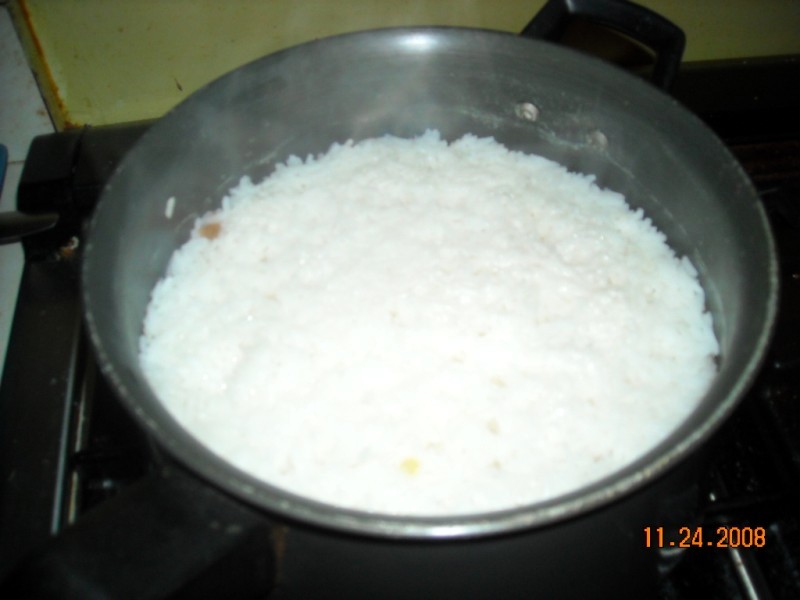
So, it is with such thoughts in mind today that I initially told myself that I couldn’t make any dinner tonight. Well, that is what I thought I told myself, until, I told myself that I could. And so, with a stiff back and not too many sudden movements, I decided to put something together. And I did. In thirty-five minutes flat.
Now, the point that I’m trying to make here is two-fold: the capability to exercise one’s mind to control one’s body—and this is indeed an amazing thing when you think about how the mind can be such an effective tool when even modern medicine can sometimes prove ineffective. The second point I wish to make is to attribute certain personal characteristics to those that we imbibe them from—and I’m not going to get into the big nature vs. nurture debate here—in this case, my abilities to multitask with speed and efficiency can only be attributed directly to what I have picked up from my mother. 🙂
Bottom line for the day: I was able to put together this meal in a jiffy. Back pain and all notwithstanding. And I was told it wasn’t too shabby either– the meal, that is. Fact is, I saw for myself that it was literally finger-lickin’ good.
Here’s what took thirty-five minutes: masoor dal, palak sabzi and white rice. The chicken curry from yesterday took three minutes to reheat in the microwave.
Not bad, eh? 🙂

Yes, that’s right, people! Sambar is associated with plenty of veggies, but I’m here to tell you that you can take any and all veggies you have or like and cook them with your favorite lentil, in my case it is the split yellow-pea, a.k.a, arhar dal, and make a fantabulous dal that can double as a hearty winter lentil soup.
Which is what I made for lunch today.
Again, you have a lovely slideshow to see for yourself what the ingredients are, and the order in which they were used and the technique of cooking. You’ll need no measures, although, you might want to get a pressure-cooker if you don’t have one. All the pictures are labeled for the details on what’s what and what’s happening!
Serve it as a stand-alone soup of the most gourmet kind, or the traditional way over white rice. Either way, enjoy! Slideshow follows:
Oh, and for all you foodies who must know the difference between a dal and a sambar: the latter has lots of veggies like the dal here, but it is also seasoned with tamarind, tomatoes and a number of other masalas.


